Printmaking: A short guide for artists submitting to our Summer Exhibition
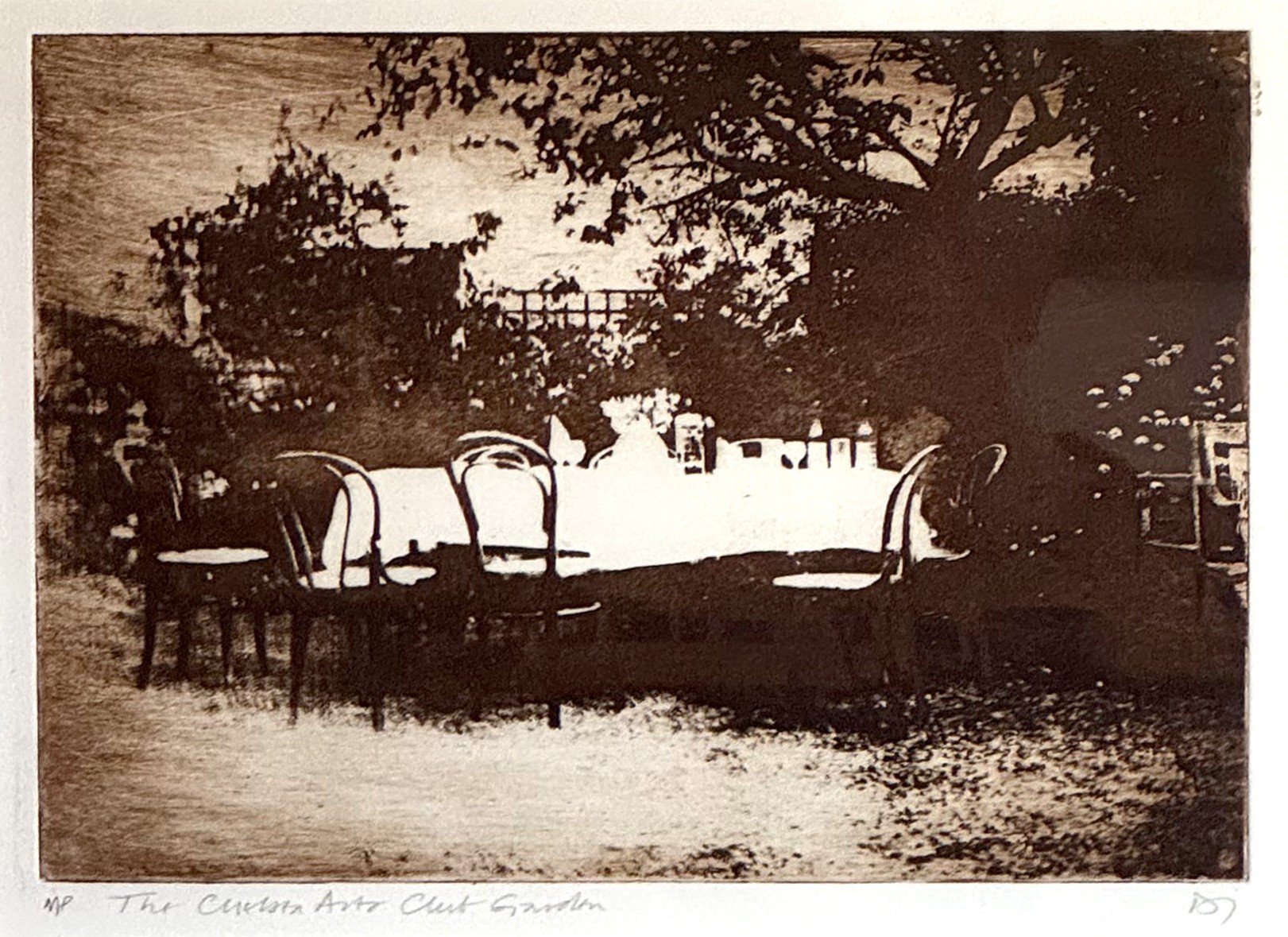
David Rhys Jones, The Chelsea Arts Club Garden, Monoprint Etching
Printmaking is one of the most exciting and varied areas of contemporary art, but it’s also one of the most misunderstood.
For our Summer Exhibition, we’re celebrating original printmaking in its truest sense: works that are made through process, pressure, and physical transformation.
So, what does that actually mean?

Charlotte Fleming, I Remember the Day I was Wearing This, Cyanotype, White Ink, Gold Leaf on Paper
The Heart of Printmaking
At its core, printmaking is about creating an image from a matrix: a surface the artist has physically worked into. This might be a carved block, an etched plate, a lithographic stone, or a screen.
Ink is then transferred from this surface onto paper. Each print carries the trace of that process: the pressure, the texture, the decisions made by hand.
That’s what we’re looking for.
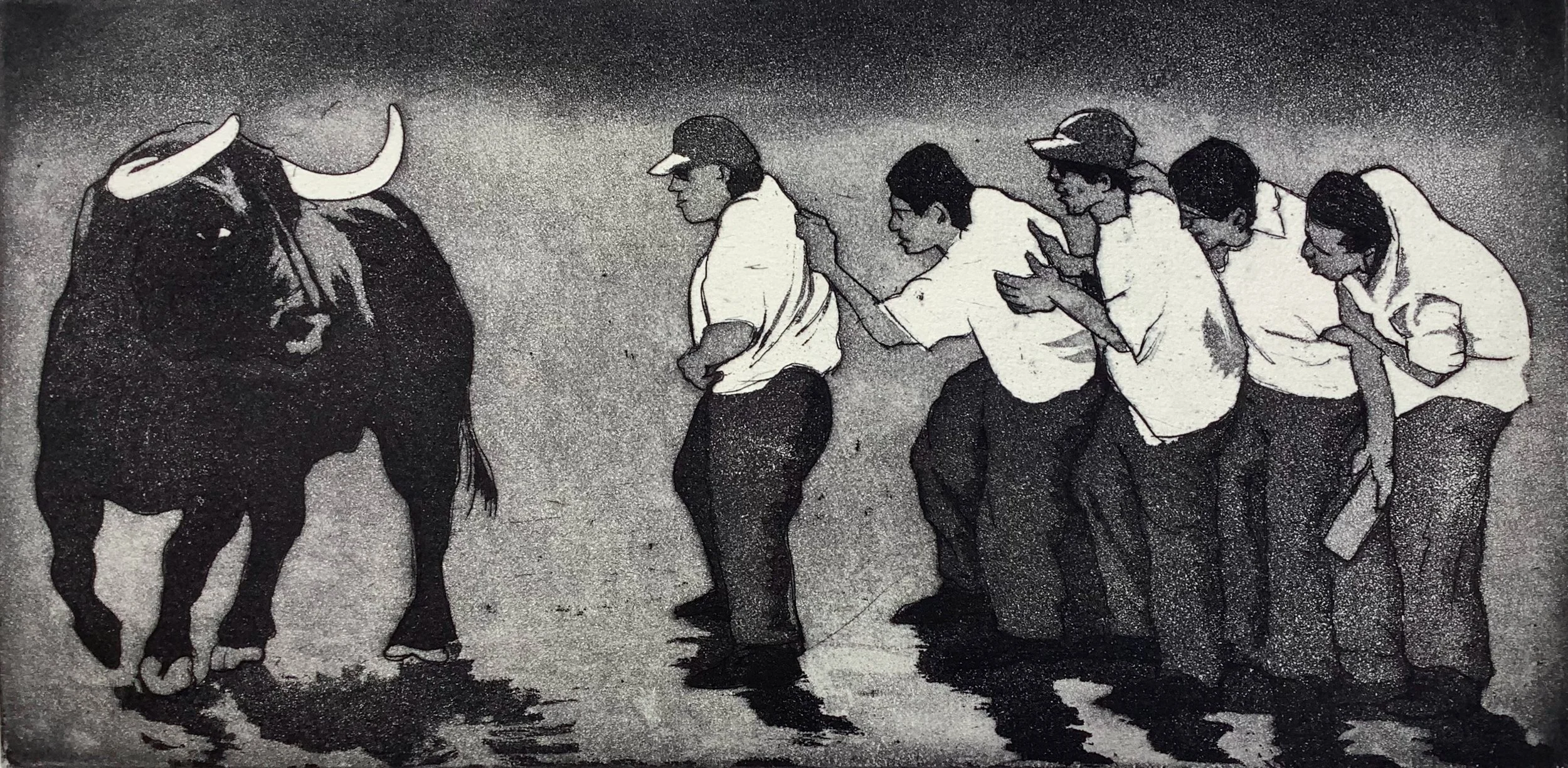
Chris Gilbert, Stand-off, Etching
The Main Types of Printmaking
Printmaking techniques are usually grouped into four families:
Relief
Think of carving away material and printing from what’s left.
Linocuts and woodcuts are classic examples.
Bold, graphic, and deeply satisfying.
Intaglio
Here, the ink sits in grooves cut into a surface.
Etching, engraving, and aquatint fall into this category.
Delicate, detailed, and rich in tone.
Planographic
Flat surfaces, cleverly prepared to hold ink only where needed.
Lithography and monotype sit here.
Painterly, expressive, and full of subtle variation.
Stencil
Ink pushed through a screen or cut surface.
Screenprinting and risograph are the most familiar.
Vibrant, layered, and contemporary.
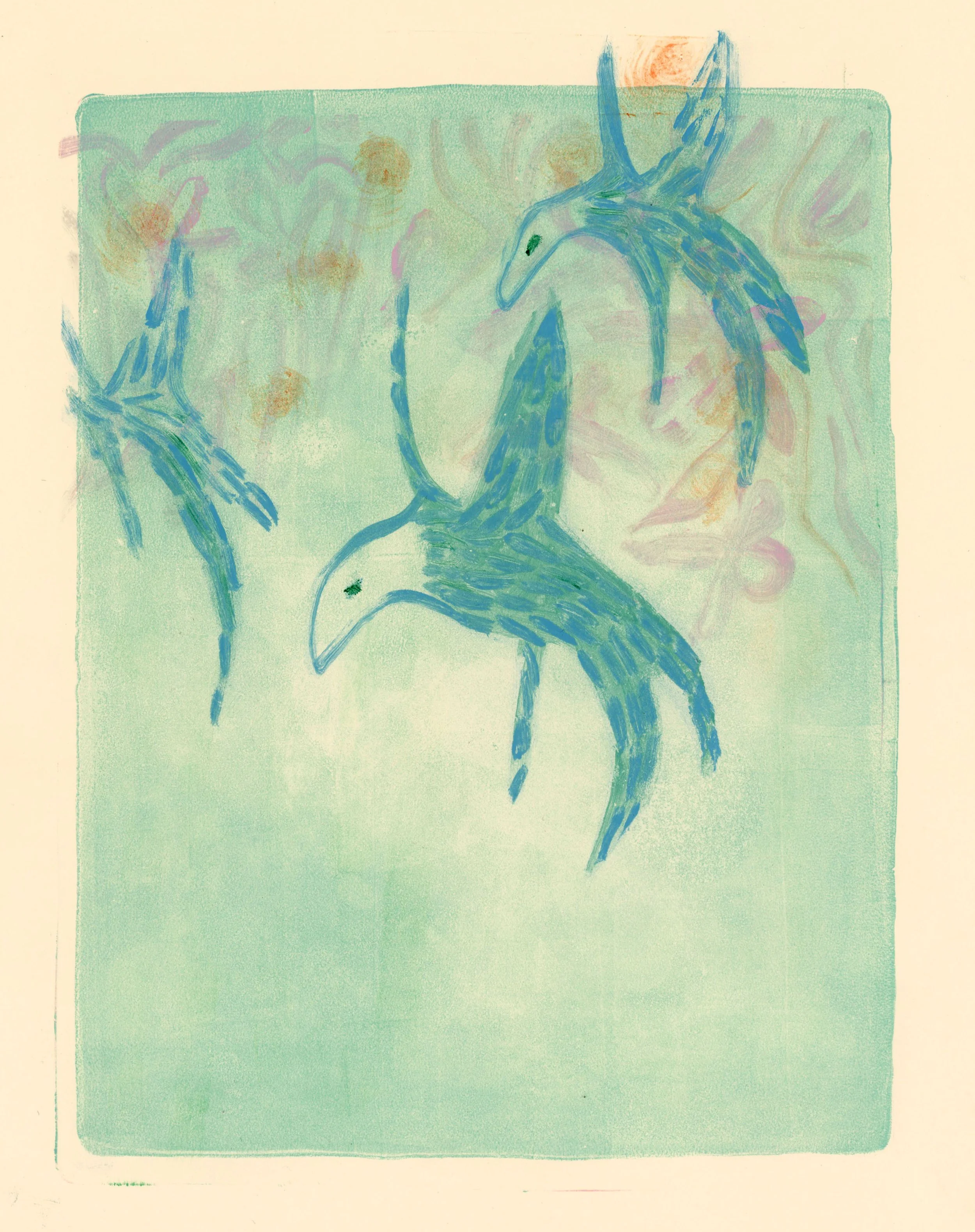
Zinta Jaunitis, Watchful Silence IV, Monotype
What We Don’t Accept, and Why
We don’t accept:
Digital prints
Giclée prints
Reproductions of existing artworks
This isn’t about hierarchy, it’s about process.
A digitally printed image, however beautiful, doesn’t carry the same physical relationship between artist, surface, and final work. It skips the moment where material meets pressure, which is what we are looking for.
A Simple Way to Think About It
Ask yourself:
Did I create a physical surface and transfer the image from it by hand?
If yes, we’d love to see it.
If it exists only as a digital file before printing, sadly, it’s not quite right for this exhibition.
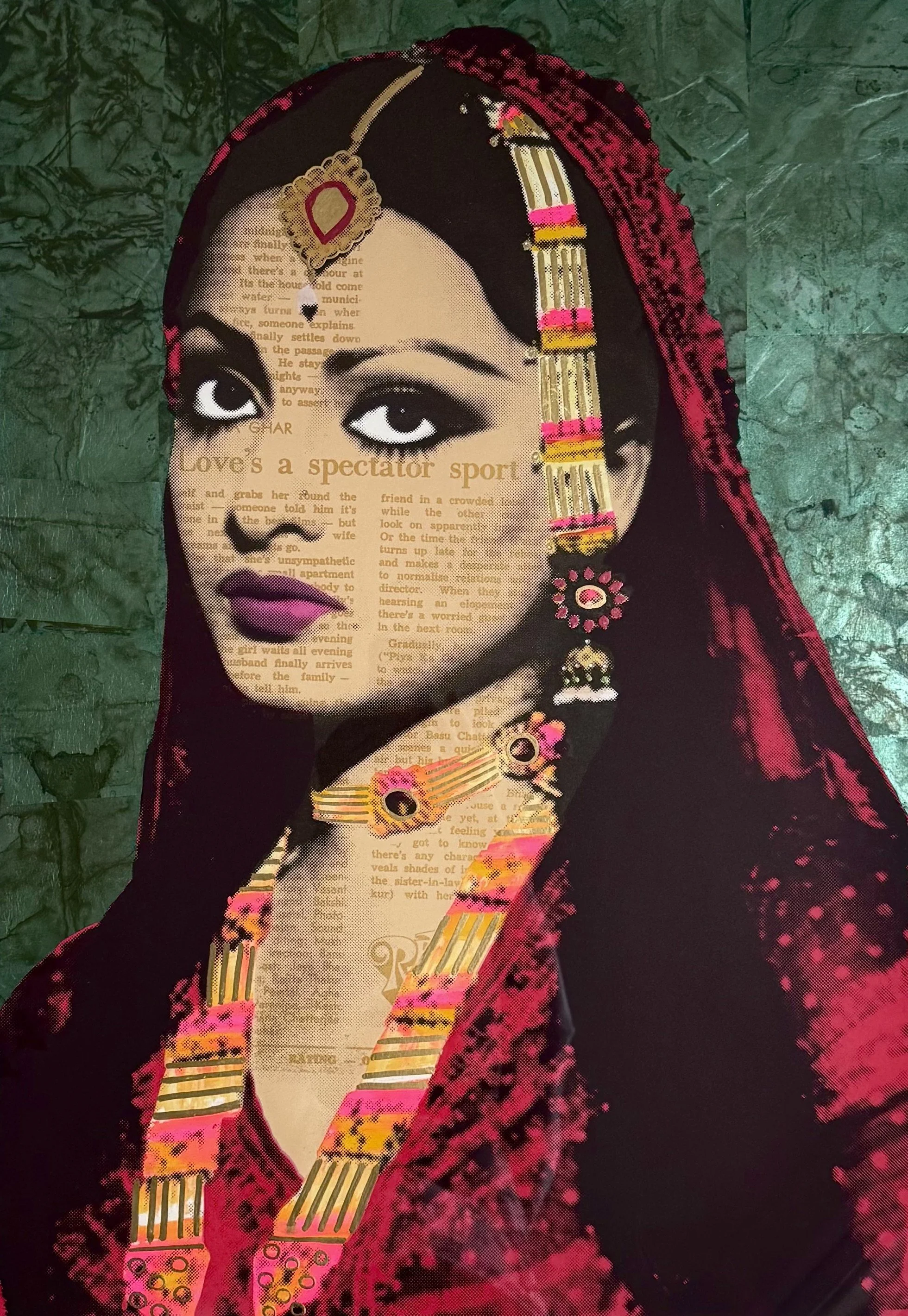
Claire Robinson, Rekha, Screen-print with 24c gold leaf and dyed silver leaf. Swarovski gems
Why This is Important to Us
As an art shop, materiality, physicality, and making a mess is at our core. Printmaking is a medium of repetition, variation, and touch. No two prints are ever truly identical, and that’s the magic.
However, we also understand that some contemporary practices sit between categories. If you are unsure whether your work qualifies, please contact us with:
A brief description of your process
Images of the work
We are happy to advise prior to submission.
If you’re unsure whether your work fits, please contact us. We would love to take a look!
We can’t wait to see what you’ve been making.
Which category do you fall into?
-
Ink is applied to the raised surface of a matrix, while carved areas remain uninked.
Examples include:Woodcut / woodblock
Wood engraving
Linocut
Metalcut
-
Ink is worked into incised lines or grooves in the surface of the matrix.
Examples include:Etching
Engraving
Mezzotint
Aquatint
Collagraph
-
The matrix surface remains flat but is chemically or physically treated to hold ink selectively.
Examples include:Lithography
Monotype / monoprint
-
Ink is pushed through a prepared surface or screen.
Examples include:Screen printing (silkscreen)
Risograph
Pochoir