
An interview with Oji Makoto
This September, we welcome Japanese painter Oji Makoto to The Gallery at Green & Stone for a solo exhibition, running from 7 - 19 September.
Based in Kyoto, Oji has developed a distinctive practice centred on realism, working across oil painting and drawing. His work explores the relationship between careful observation, material and the structure of a painting.
Oji has a long standing interest in Italian art and culture, which has grown through his involvement with the Florence Prize Exhibition at the Setsuryosha Museum of Art. He is also interested in classical painting techniques and teaches oil painting at Kyoto University of the Arts alongside his studio practice.
Ahead of his exhibition, we spoke to Oji about his approach to painting, his interest in realism and classical techniques, and the influences behind his work.
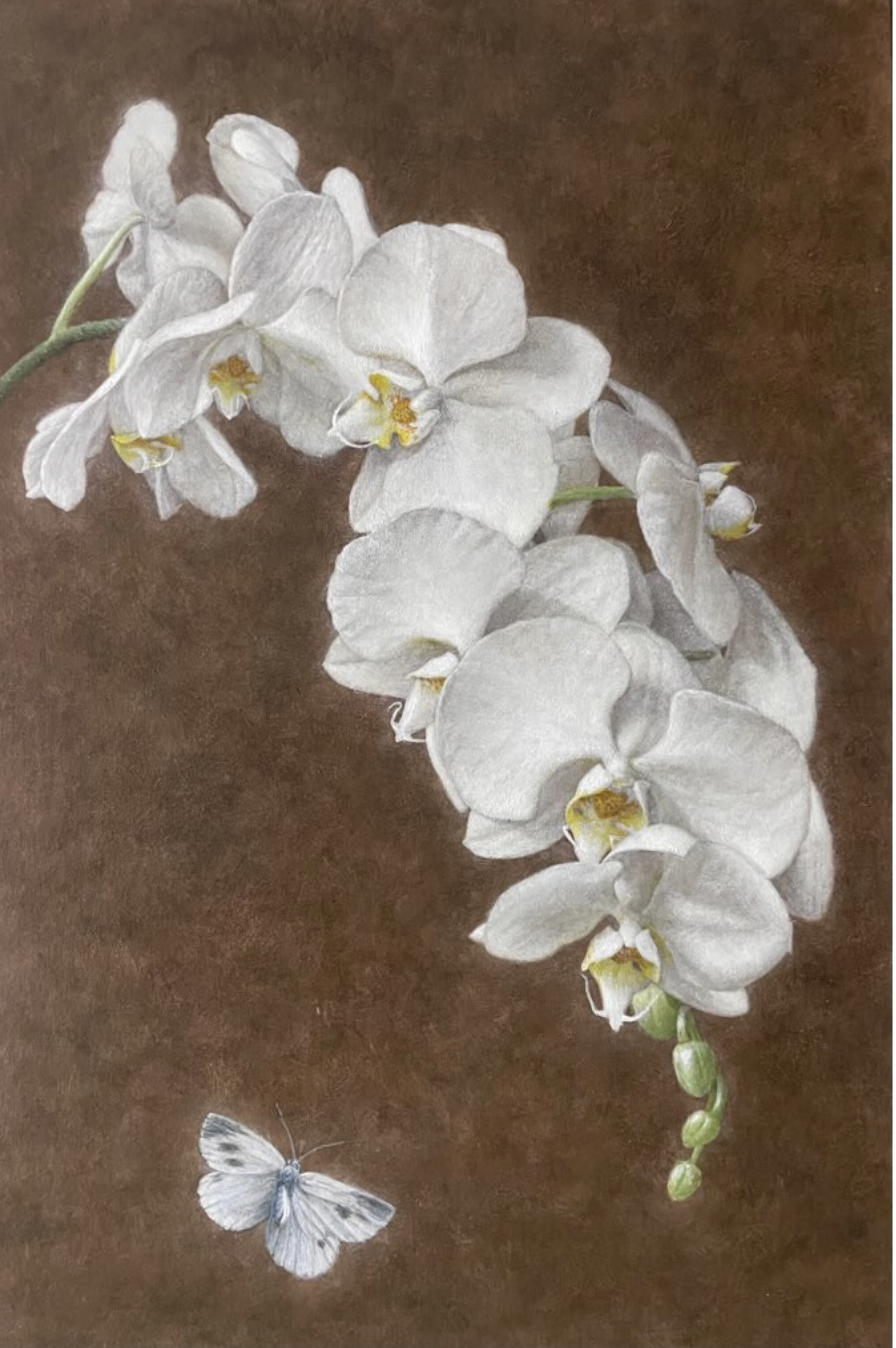
Alluring, Oji Makoto
Could you tell us a little about yourself and your practice?
I was born in Osaka, Japan, and I currently balance my creative practice with teaching oil painting at the Kyoto University of the Arts. In Japan, I hold solo exhibitions roughly once a year and participate in numerous group exhibitions. Recently, I have also had increasing opportunities to present my work in the United Kingdom and Italy.
You often paint flowers and fruit. What do you think draws you to these subjects?
To me, flowers and fruits represent the culmination of life, they are symbols of vitality. For me, the act of creation is an embodiment of these symbols, and I believe I am drawn to them because they possess a form that allows one to tangibly feel the essence of life itself.
You have described your paintings as ‘a quiet celebration of life’. Could you tell us a little more about what that means to you?
From the very moment of inception, life is in a constant, earnest progression toward death. It is precisely because life is finite that it appears so radiant, compelling me to offer it a hymn. My work is a manifestation of that sentiment.
Observation plays an important role in your work. What do you look for when you begin a painting?
While observation is indeed crucial, for me, it begins long before I touch the canvas. It starts by confronting the motif. Through this observation, I contemplate the nature of the subject and consider how best to express its vitality. My work is the culmination of this process, a reproduction of the sensory immediacy I felt when standing before the subject. To me, the true meaning of ‘observation’ is to be present, to breathe the same air, and to experience the same light as the motif itself.
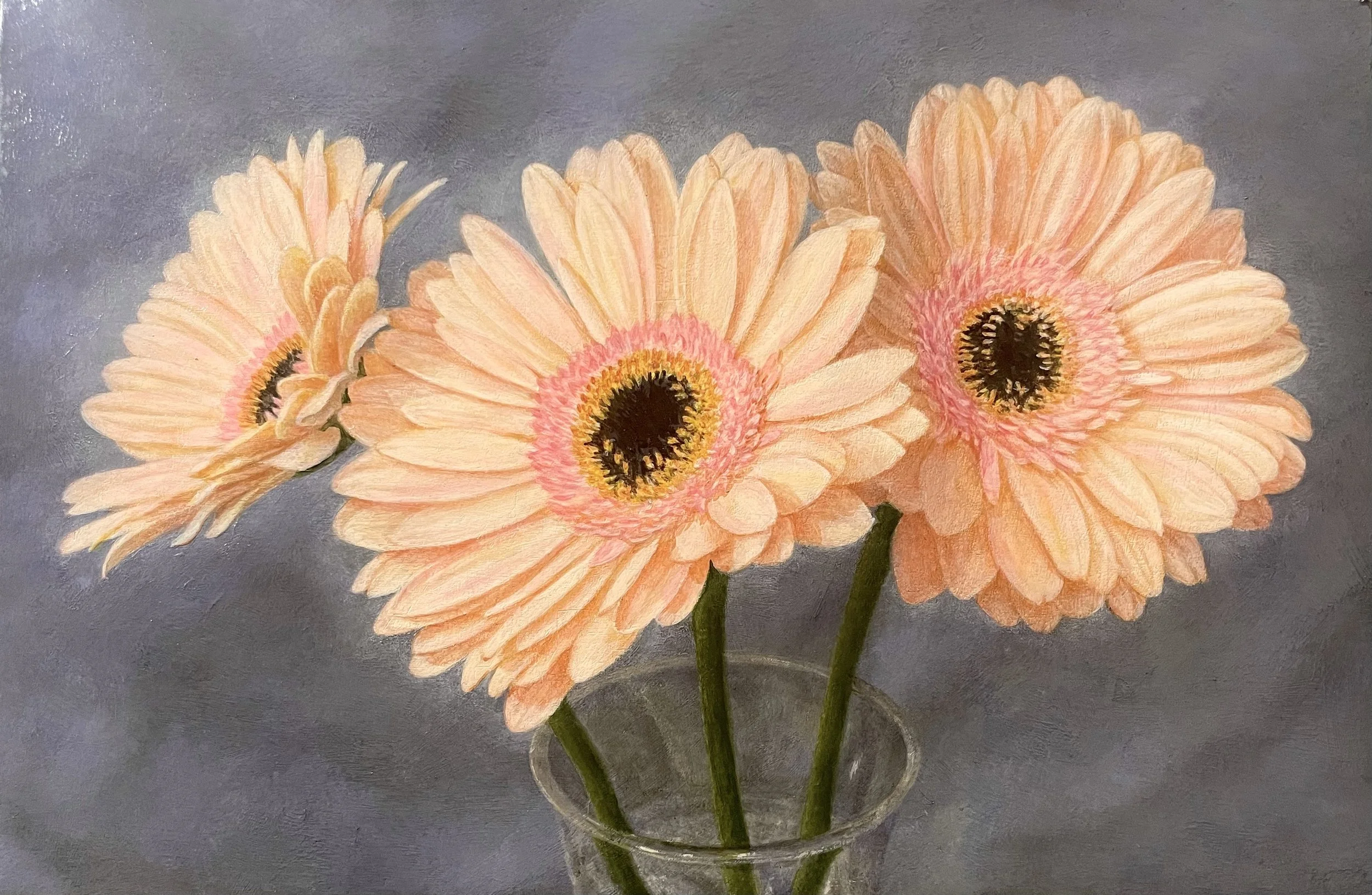
Gerbera, Oji Makoto
Your practice brings together traditional techniques, such as fresco and tempera, with contemporary materials. What interests you about working across both?
Throughout human history, countless techniques and materials have been born, only to fade away and be lost to time. In contrast, ‘classical techniques’ like fresco and tempera have been passed down to this day because their utility and expressive potential have been proven time and again. They are, in essence, ‘proven by history’. It is an honor as an artist to inherit these secret techniques, and I believe it is our duty to transmit them to future generations. I find that the fusion of these traditional methods with contemporary materials holds the potential for a unique chemical reaction. The human capacity to perceive beauty is not dictated by the age of the technology, but by the skill of the creator who blends them; that is precisely what I strive to achieve.
You teach alongside your own studio practice. Do the two influence one another?
I believe that ‘to teach is to learn’. In my own practice, I often work intuitively, but when teaching, I am required to structure my thoughts and convey them logically. Furthermore, when I explain art history or specific artists, I must ensure the accuracy of my knowledge, which necessitates constant study. While these efforts are for the sake of my students, they ultimately benefit me as well. I approach teaching with the mindset that I am a fellow student learning alongside them.
This is your second exhibition in London. How does it feel to be showing your work here again?
While this is my first solo exhibition in London, I have previously exhibited in the UK at the Brunei Gallery in 2010 and held a two-person show with Matthew Phinn at the Avivson Gallery. Holding a solo exhibition outside of Japan has long been a profound ambition of mine. I am deeply curious to see how my work will be perceived by an international audience. Moreover, presenting in the United Kingdom, a country with such a rich artistic history, home to institutions like the National Gallery and the Tate, is both a significant challenge and a distinct honour for me. I look forward to sharing my work and hearing the perspectives of those who view it.
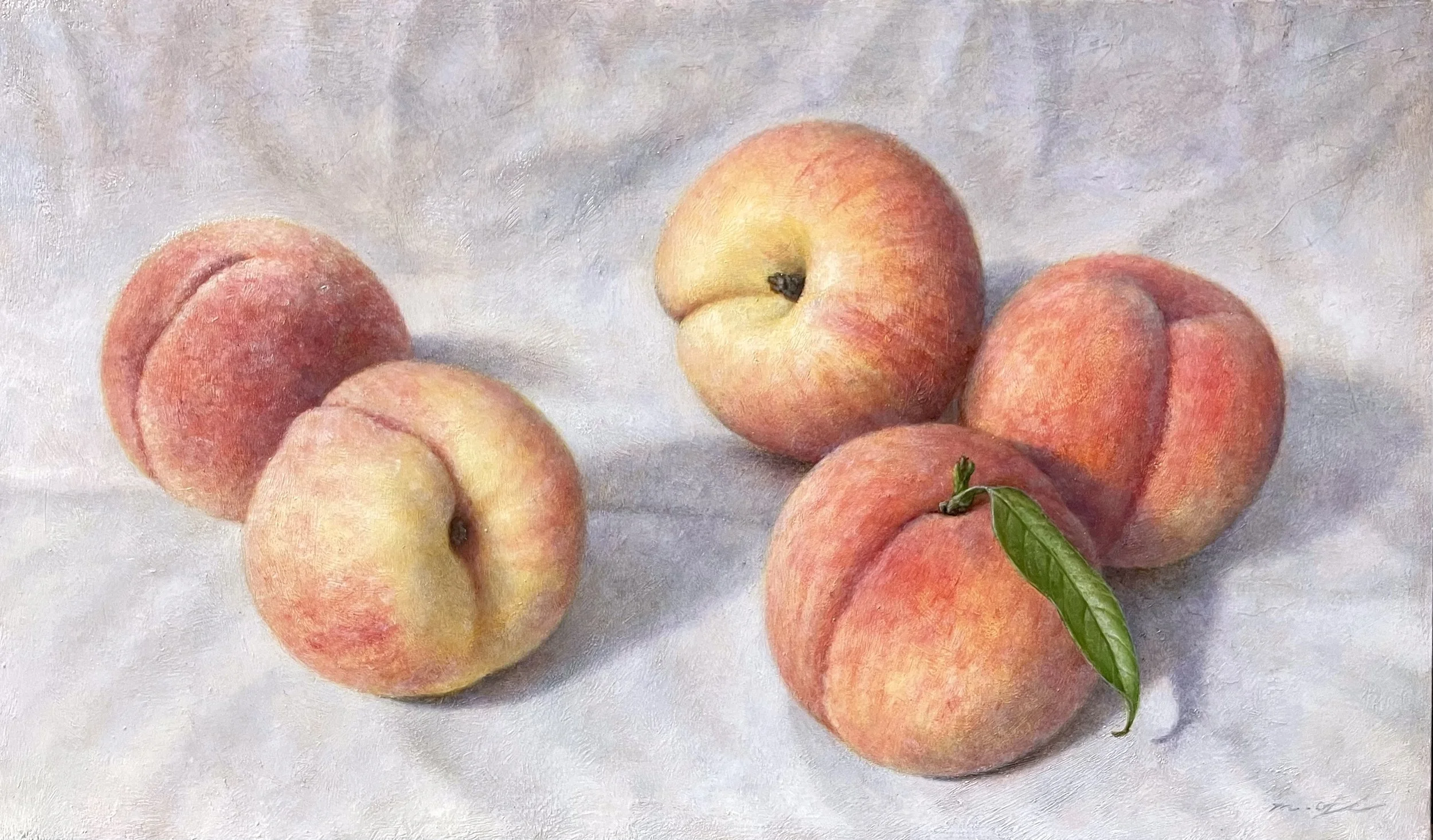
Five peaches, Oji Makoto
What are you currently working on in the studio?
While still in the conceptual stage, I am planning a series of works incorporating "fossils." It is a motif I explored in the past, but one that I find myself drawn to once again. I hope to capture the traces of beings that lived millions, or even hundreds of millions, of years ago.
Who and what inspires you?
I am inspired by those who courageously embrace new challenges; they are my ideal, and their drive motivates me to push forward. As for artists, I deeply admire my mentor, the Japanese painter Hiroshi Noda, as well as the Spanish painter Antonio López García. Both are masters of realism who possess the ability to grasp the essence of their subjects and translate that truth through the language of representational painting.
What do you hope visitors take away from your work?
I am always striving to manifest a sense of ‘life’ in my work. My deepest hope is to share with the viewer the same sense of immediacy and presence that I experienced when standing before my subject.
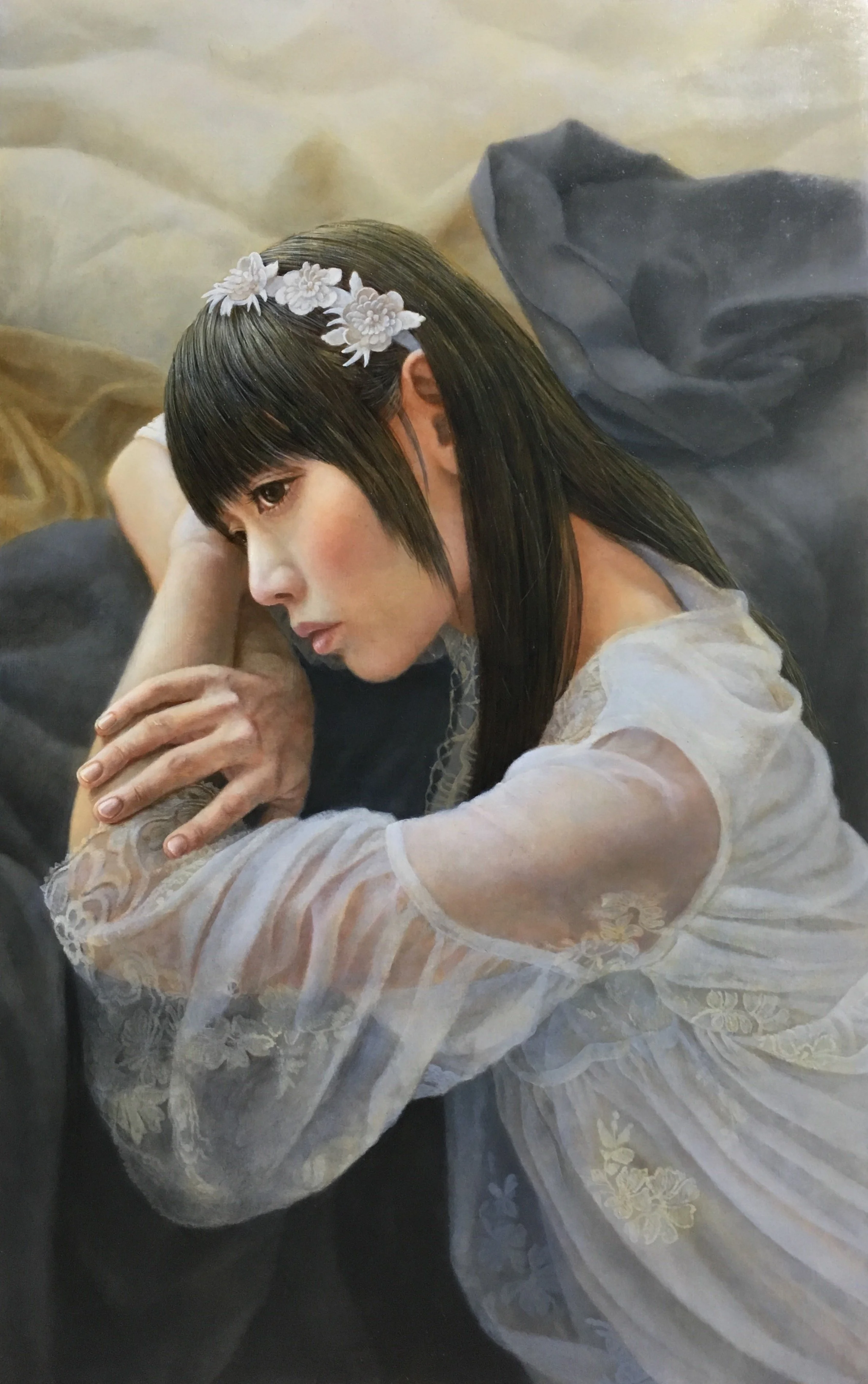
Waking from a dream, Oji Makoto
Oji Makoto’s solo show will take place at The Gallery at Green & Stone from 7 - 19 September.