Artist Spotlight: Maheen Elahi
Ahead of Maheen Elahi’s show Reimagined Realities (May 5–16), we sat down to talk about her practice, miniature painting, and the influence of growing up in Pakistan.
Reimagined Realities will be on view at the gallery from May 5 to May 16.
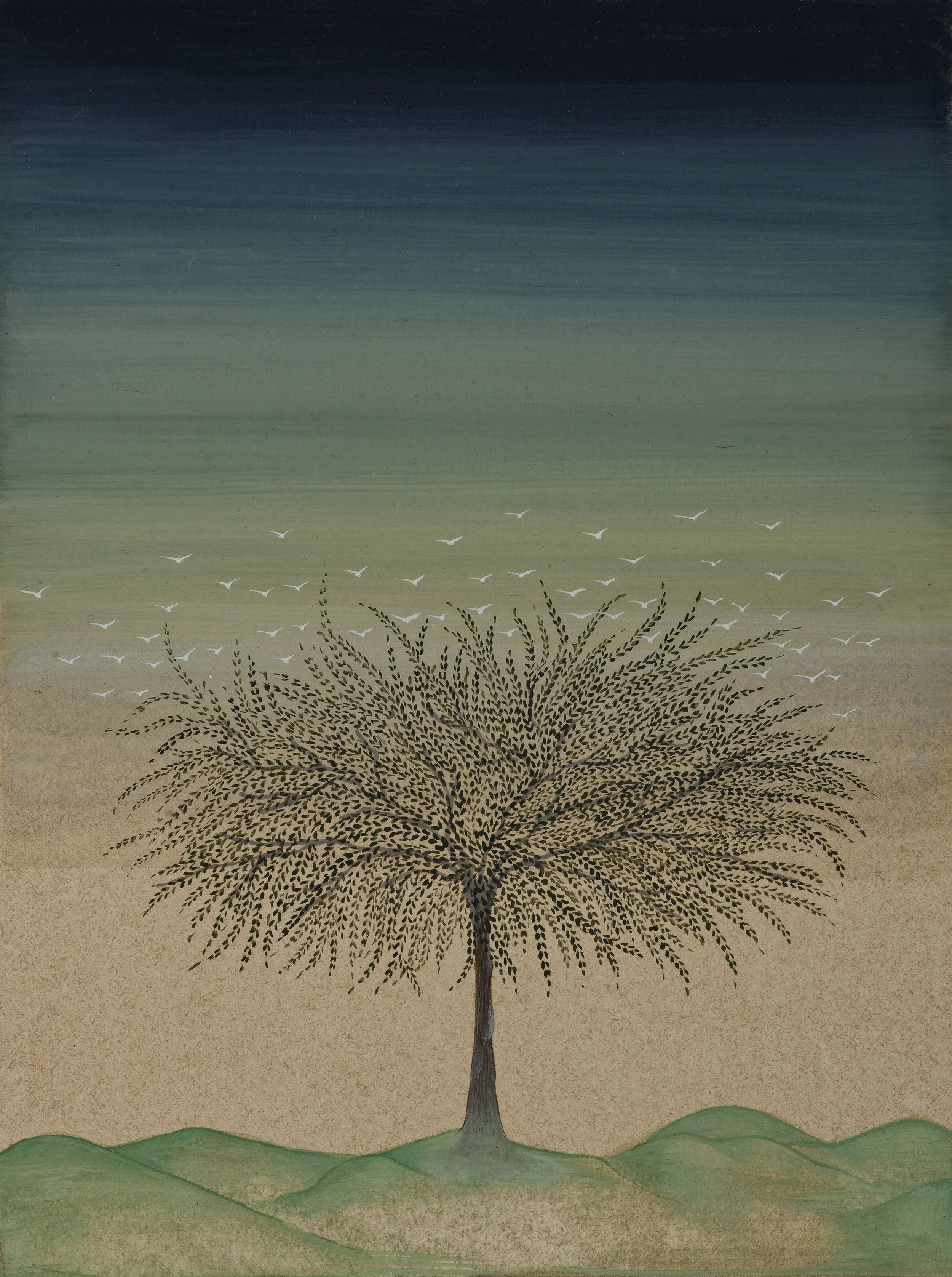
Reimagined Realities 8 | Gouache on Wasli | 15.2 x 20.3 cm
Who or what inspires your work the most, both within and outside the tradition of miniature painting? Are there particular artists, movements, or cultural influences that have shaped your practice?
My work is inspired less by individuals and more by atmospheres, by the quiet poetry of lived experience. Within miniature painting, I am deeply influenced by its discipline, precision, and lineage of attention. Beyond it, I draw from landscapes, memory, and the sensory weight of place particularly the way light, colour, and stillness hold emotional resonance.
Can you tell us how growing up in Pakistan has influenced your work and subject matter?
Growing up in Lahore, a city where history and daily life intertwine so seamlessly, shaped my sensitivity to both presence and absence. The courtyards, gardens, and shifting light of the city instilled in me an awareness of subtle change of how environments carry emotion. This continues to inform my landscapes, which are less about depiction and more about feeling.
Can you briefly describe your creative process from idea to finished miniature?
My process begins with observation, often something fleeting, like a colour, a mood, a memory. I then translate this into a simplified composition. The painting itself unfolds slowly, through layers of fine brushwork on Wasli paper. Each stage requires patience, allowing the work to emerge gradually rather than be forced into completion.
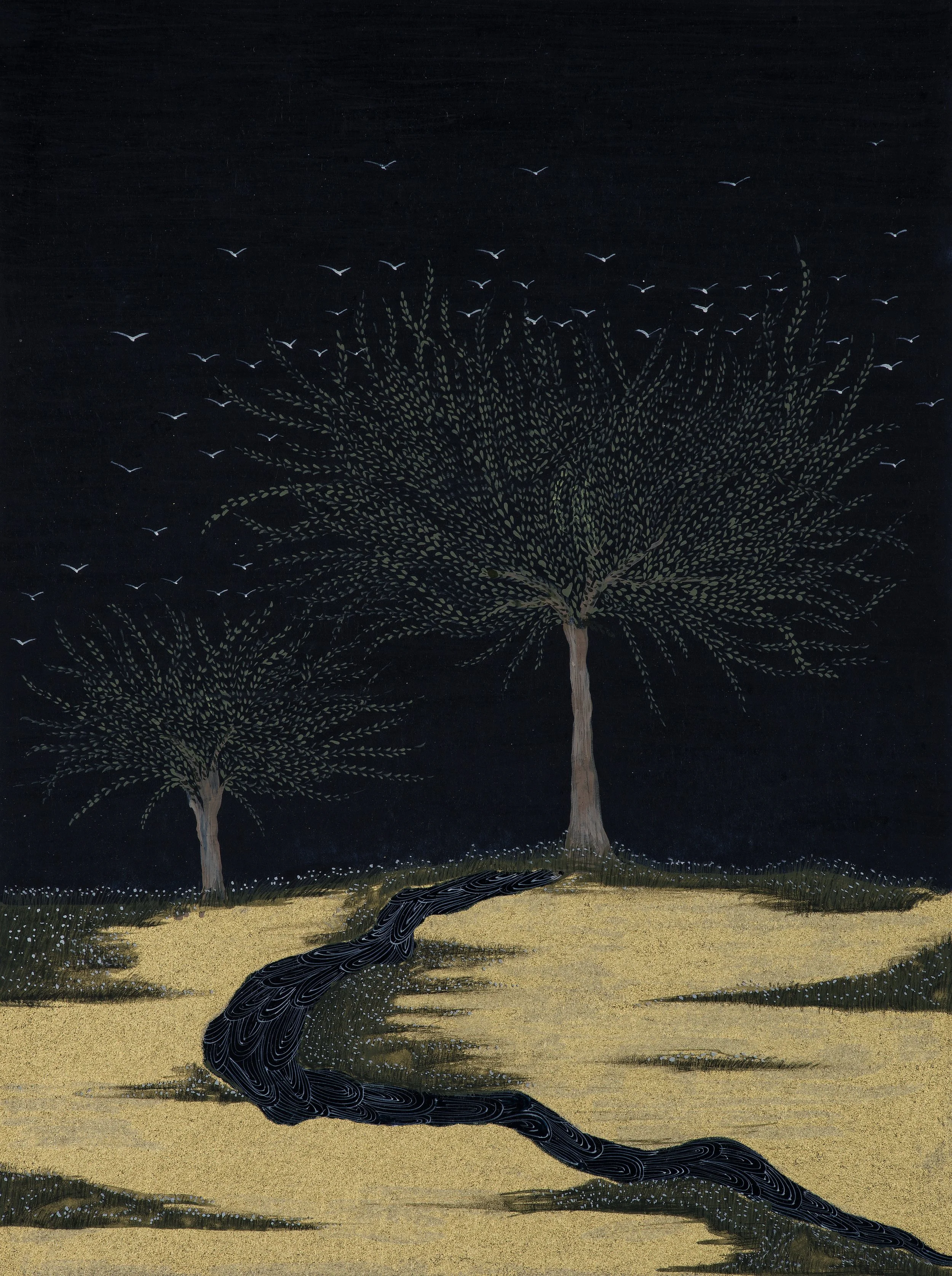
Reimagined Realities 17 | Gold Ink and Gouache on Wasli | 6 x 8 inches
What impact does the historic tradition of miniature painting have on you, how were you introduced to it? What made you choose this form of expression?
I was introduced to miniature painting through formal training, where I encountered its rigour and discipline. What drew me to it was its intimacy, the way it demands attention and presence. The tradition offers a structure, but within it, I found space to explore something quieter and more personal.
You’re going to a desert island, what art materials are you bringing with you? What product can you not live without?
I would bring Wasli paper, a few fine brushes, and a small selection of pigments. If I had to choose one thing I couldn’t live without, it would be a single, well-pointed brush.
I know that you get some of your pigments from the market in Pakistan, can you talk me through the process?What binder do you use? Do you always prepare your own pigments and paper, or do you sometimes use pre-made materials?
I often source pigments locally and grind them by hand, building colour slowly and intentionally. I use gum arabic as a binder. While I value the process of preparing my own materials, particularly Wasli, I do occasionally work with pre-made materials.
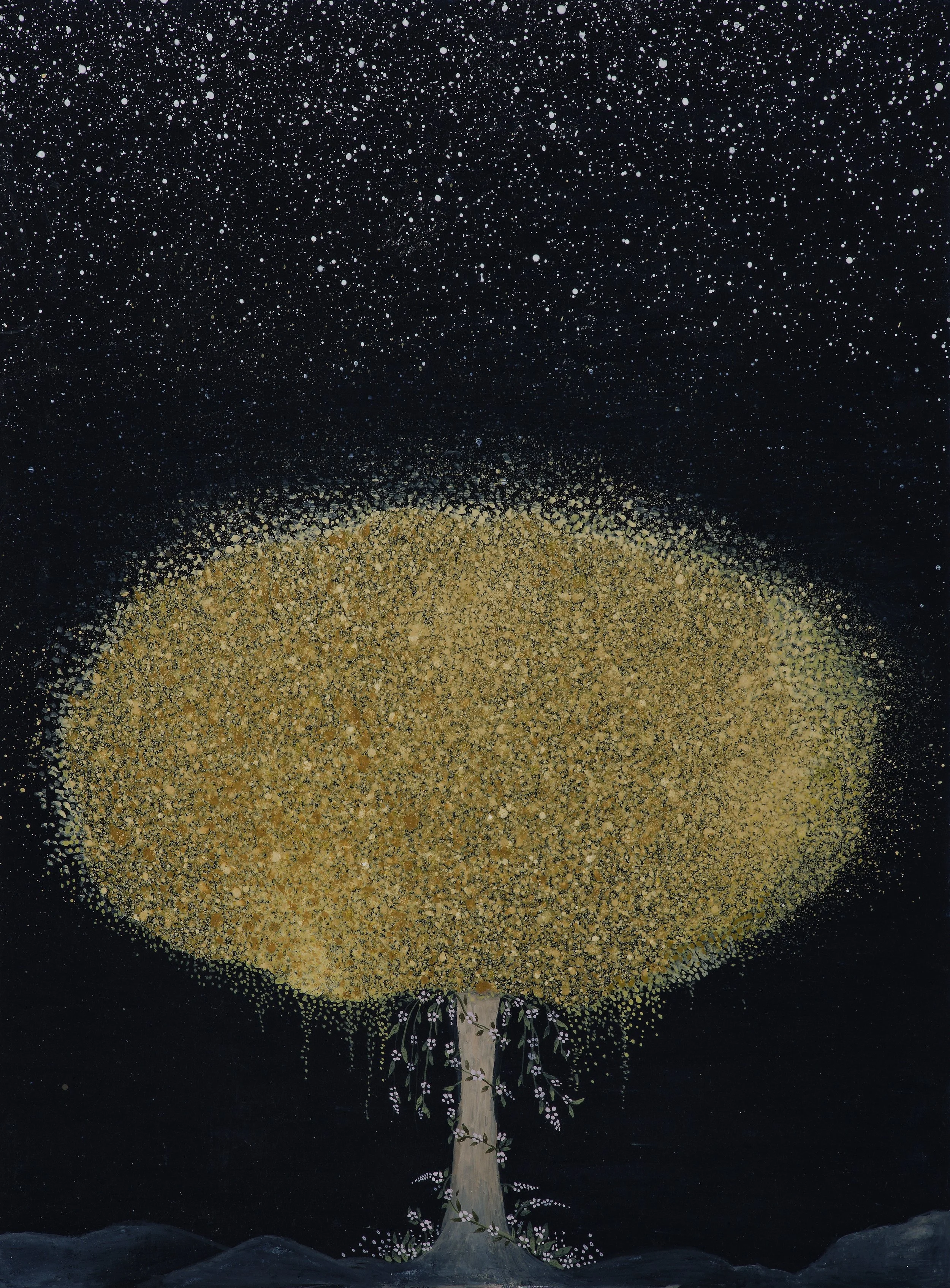
Reimagined Realities 16 |Gouache on Wasli | 6 × 8 inches
What kind of brushes do you prefer to use, and why?
I prefer very fine, pointed brushes, often squirrel hair, because they allow for precision and delicacy.
Are there any traditional tools you use, or do you experiment with modern materials?
I work with traditional tools such as Wasli, burnishers, and natural pigments, but I remain open to contemporary materials when they support my work. It’s a balance between preservation and evolution.
Are there any rituals or habits that help you in the studio to get into a creative mindset?
The process itself becomes the ritual. I begin slowly preparing surfaces, mixing pigments, this allows me to enter a quieter mental space. It is less about forcing creativity and more about arriving at it gently.
What does a typical day in your studio look like? Do you listen to music, podcasts, or prefer silence while working?
My studio practice is quiet and immersive. I often work in silence, allowing the rhythm of the process to guide me. Time is measured more by layers than by hours.
What themes do you find yourself returning to in your work?
I keep returning to the idea of finding peace within solitude. My landscapes explore quiet moments where being alone feels calm, grounding, and complete.
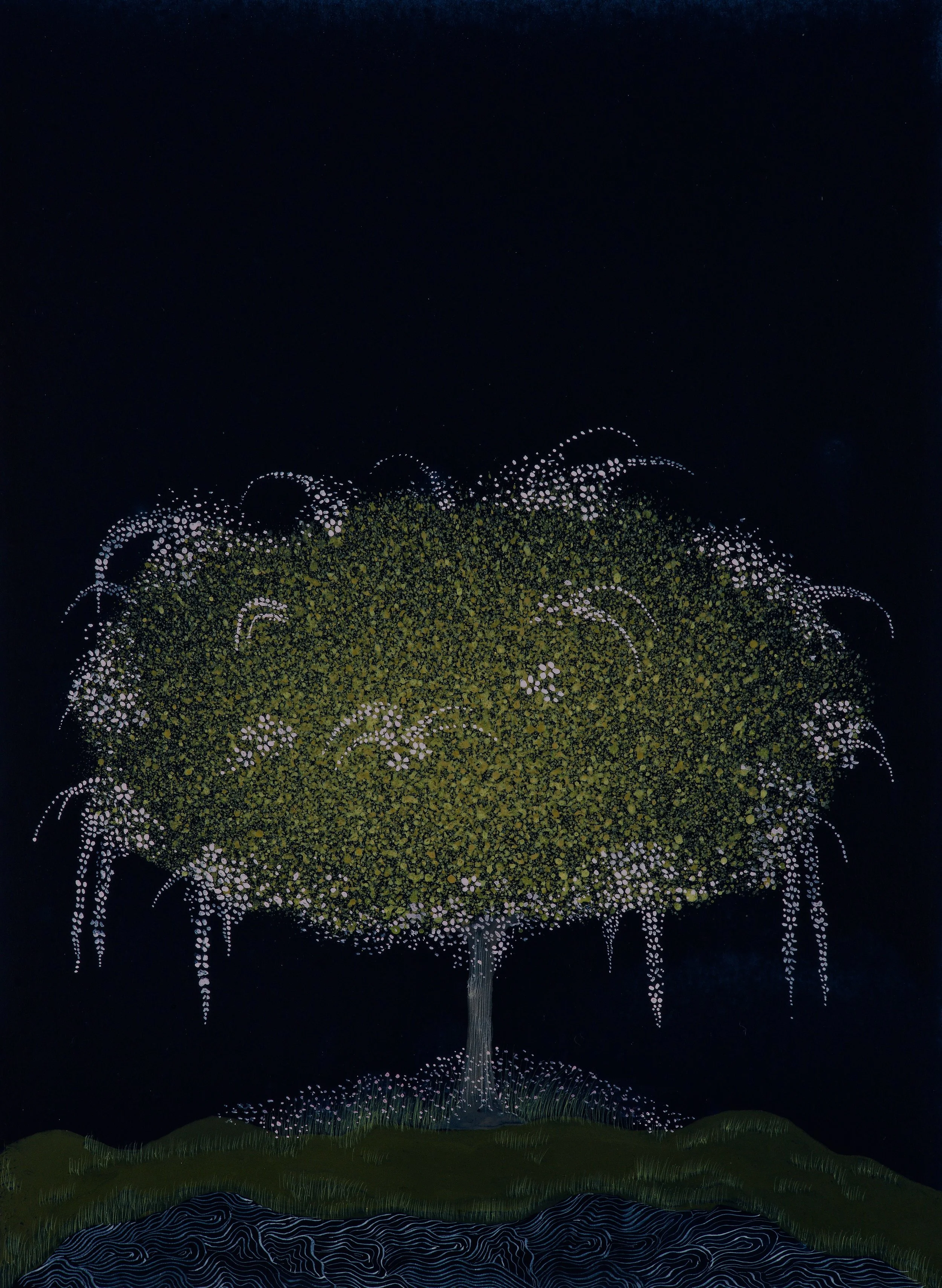
Reimagined Realities 2 | Gouache on Wasli | 6 × 8 inches
Do your paintings aim to tell a specific story, or are they more open to interpretation?
My paintings are intentionally open, I am more interested in creating a space for reflection than in telling a fixed story. The meaning emerges in the encounter between the work and the viewer.
What role do you think miniature painting plays in contemporary art today?
Miniature painting continues to evolve as a living practice. It carries history, but also offers a space for reinterpretation, allowing artists to engage with contemporary concerns through a deeply rooted visual language.
How do you see your work contributing to or challenging the tradition of miniature painting?
My work maintains the discipline and techniques of the tradition, but shifts its focus toward atmosphere and interiority rather than narrative. In doing so, it expands the emotional and conceptual possibilities of miniature painting.
What is your favourite piece in this exhibition and why?
Every piece is very special to me, and letting them go is always the hardest part. I don’t have a single favourite ,they all feel equally close to me in their own way.
What do you want people to learn from your exhibition?
I hope viewers experience a moment of pause, a quiet moment. More than anything, I want the work to offer a sense of stillness, and perhaps a reminder that peace can be found within, even amidst constant movement.
Reimagined Realities is in the Gallery from May 5 to May 16.